Chavez marks Venezuela independence, foes unhappy
Chavez marks Venezuela independence, foes unhappy
By Andrew Cawthorne
Reuters
Sunday, April 18, 2010; 2:43 PM
CARACAS (Reuters) - President Hugo Chavez kicked off a national party on Sunday for the 200th anniversary of Venezuela's independence, but critics used the date to accuse him of turning the nation into a Cuban-style dictatorship.
The socialist leader -- who casts himself as the heir to 19th century South American independence leader Simon Bolivar -- was due to welcome fellow leftist heads of state, including Cuba's Raul Castro and Bolivia's Evo Morales, during the day.
On Monday, exactly 200 years after Venezuela's initial declaration of independence from Spain, the leaders of the Chavez-led ALBA alliance of nations are to hold a summit in Caracas amid celebrations across the nation.
"We are just a few hours away from the great party," Chavez wrote. "Happy commemoration of 200 years of struggle. Fatherland, Socialism or Death! We will overcome!"
As well as adopting the language of his friend and mentor Fidel Castro, the former Cuban president, Chavez has likewise presented his 11-year rule as a chance for Venezuela to finally achieve true independence after decades of capitalist rule.
The Venezuelan socialist, who came to prominence in a failed 1992 coup and then won power at the ballot-box six years later, has taken over Fidel Castro's role as the continent's leading critic of U.S. power.
Street-parties and special events were beginning all over Venezuela on Sunday. Armies of workers and volunteers -- dressed in the red T-shirts and caps of Chavez supporters -- swarmed over Caracas, sprucing up streets and buildings ahead of a military parade and other events planned for Monday.
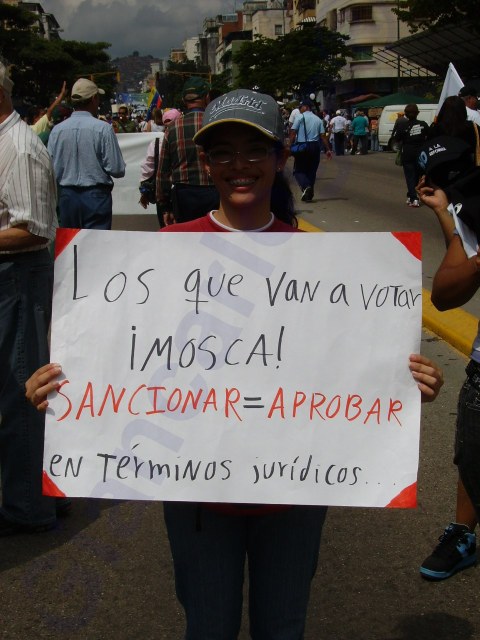
Opponents, who have only beaten Chavez once in about a dozen votes since 1998, fumed as they saw him turn the anniversary into a massive show of support for his government.
Some supporters of the "First Justice" party rallied at a Caracas square for an alternative "independence declaration".
"After 200 years, we are again under an odious foreign domination," its leader Julio Borges said, accusing Chavez of an "indignant submission" to the Castro brothers. "The freedom fighters 200 years ago did not fight for ... dictatorship."
"CHAVISTA TO THE CORE"
Thousands of Cubans are working with the Chavez government, deployed in shanty-town medical clinics and sports training centers and delicate areas such as security agencies and energy projects.
Chavez supporters view that as a model of international cooperation, while critics say it breaches sovereignty.
Former Venezuelan president Carlos Andres Perez, whom Chavez failed to oust in 1992, also weighed in.
"It is not possible to celebrate when a militarized, authoritarian and pro-Communist regime, headed by a murderous coup-monger, has kidnapped the nation," he said.
Perez even compared Chavez to Hitler in his buildup of a pro-government militia. The training of teenage "communications guerrillas" -- to counter the anti-Chavez push of private media -- has divided Venezuelan opinion this week.
Chavez and his critics are building up to a September assembly vote, where opposition parties hope to cut into the government's majority and show his popularity is waning.
Though opinion polls are difficult to follow in Venezuela, due to accusations of political bias, it is clear Chavez's popularity has fallen in the last year, from more than 60 percent to about 50 percent or less.
That, however, is still a relatively high rating and enough to help him win in September, analysts say. Venezuela's poor majority give Chavez high marks for social policies including free clinics and schools, and subsidized food networks.
"This idea that Chavez is losing approval and is on the way out is absolute rubbish," said pensioner Edith Valencia, eating at a state-run "socialist pancake" shop in Caracas.
"We admit not everything is perfect and it is a tough year, we even admit he has made some mistakes. But will we vote for him? You bet! I am a Chavista to the core."
Russian Prime Minister Vladimir Putin and Belarussian President Alexander Lukashenko -- both recent visitors to Venezuela -- sent congratulations for the 200th anniversary.
Chavez is seeking to strengthen global ties that work against U.S. dominance and would have been hosting Chinese President Hu Jintao this weekend were it not for a major earthquake in western China.
By Andrew Cawthorne
Reuters
Sunday, April 18, 2010; 2:43 PM
CARACAS (Reuters) - President Hugo Chavez kicked off a national party on Sunday for the 200th anniversary of Venezuela's independence, but critics used the date to accuse him of turning the nation into a Cuban-style dictatorship.
The socialist leader -- who casts himself as the heir to 19th century South American independence leader Simon Bolivar -- was due to welcome fellow leftist heads of state, including Cuba's Raul Castro and Bolivia's Evo Morales, during the day.
On Monday, exactly 200 years after Venezuela's initial declaration of independence from Spain, the leaders of the Chavez-led ALBA alliance of nations are to hold a summit in Caracas amid celebrations across the nation.
"We are just a few hours away from the great party," Chavez wrote. "Happy commemoration of 200 years of struggle. Fatherland, Socialism or Death! We will overcome!"
As well as adopting the language of his friend and mentor Fidel Castro, the former Cuban president, Chavez has likewise presented his 11-year rule as a chance for Venezuela to finally achieve true independence after decades of capitalist rule.
The Venezuelan socialist, who came to prominence in a failed 1992 coup and then won power at the ballot-box six years later, has taken over Fidel Castro's role as the continent's leading critic of U.S. power.
Street-parties and special events were beginning all over Venezuela on Sunday. Armies of workers and volunteers -- dressed in the red T-shirts and caps of Chavez supporters -- swarmed over Caracas, sprucing up streets and buildings ahead of a military parade and other events planned for Monday.
Opponents, who have only beaten Chavez once in about a dozen votes since 1998, fumed as they saw him turn the anniversary into a massive show of support for his government.
Some supporters of the "First Justice" party rallied at a Caracas square for an alternative "independence declaration".
"After 200 years, we are again under an odious foreign domination," its leader Julio Borges said, accusing Chavez of an "indignant submission" to the Castro brothers. "The freedom fighters 200 years ago did not fight for ... dictatorship."
"CHAVISTA TO THE CORE"
Thousands of Cubans are working with the Chavez government, deployed in shanty-town medical clinics and sports training centers and delicate areas such as security agencies and energy projects.
Chavez supporters view that as a model of international cooperation, while critics say it breaches sovereignty.
Former Venezuelan president Carlos Andres Perez, whom Chavez failed to oust in 1992, also weighed in.
"It is not possible to celebrate when a militarized, authoritarian and pro-Communist regime, headed by a murderous coup-monger, has kidnapped the nation," he said.
Perez even compared Chavez to Hitler in his buildup of a pro-government militia. The training of teenage "communications guerrillas" -- to counter the anti-Chavez push of private media -- has divided Venezuelan opinion this week.
Chavez and his critics are building up to a September assembly vote, where opposition parties hope to cut into the government's majority and show his popularity is waning.
Though opinion polls are difficult to follow in Venezuela, due to accusations of political bias, it is clear Chavez's popularity has fallen in the last year, from more than 60 percent to about 50 percent or less.
That, however, is still a relatively high rating and enough to help him win in September, analysts say. Venezuela's poor majority give Chavez high marks for social policies including free clinics and schools, and subsidized food networks.
"This idea that Chavez is losing approval and is on the way out is absolute rubbish," said pensioner Edith Valencia, eating at a state-run "socialist pancake" shop in Caracas.
"We admit not everything is perfect and it is a tough year, we even admit he has made some mistakes. But will we vote for him? You bet! I am a Chavista to the core."
Russian Prime Minister Vladimir Putin and Belarussian President Alexander Lukashenko -- both recent visitors to Venezuela -- sent congratulations for the 200th anniversary.
Chavez is seeking to strengthen global ties that work against U.S. dominance and would have been hosting Chinese President Hu Jintao this weekend were it not for a major earthquake in western China.
posted by Roraima at
2:20 PM
0 Comments
Links to this post